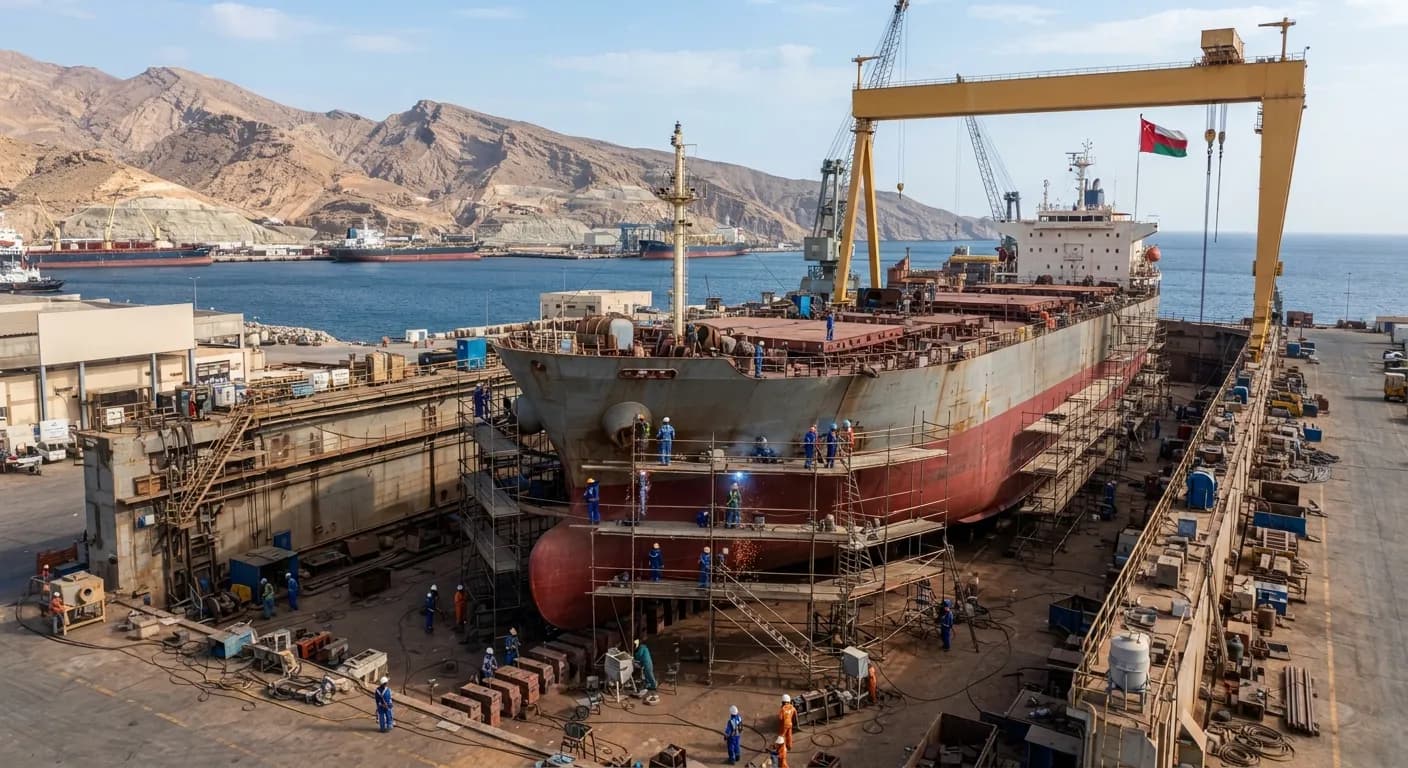
Planning a Ship Repair Period in China: Holiday Shutdowns, Typhoons and Technical Risks

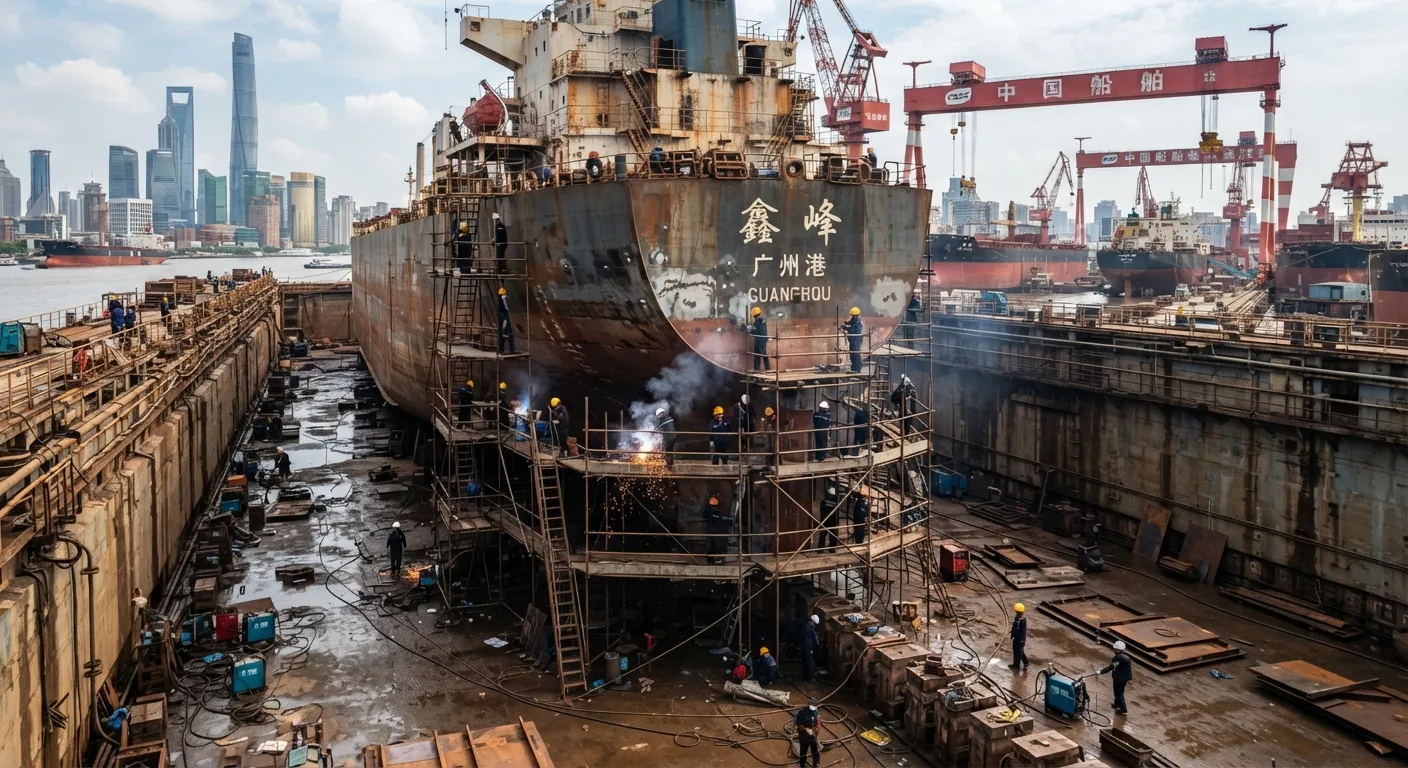
China handles a significant share of the world's ship repair work, but the repair calendar comes with risks that a yard quotation may not reflect. Public holidays, seasonal weather and supply-chain disruptions can add days or even weeks to a repair period.
Zhoushan alone accounts for 45% of China's repair work for foreign vessels and more than 20% of the global market, and five of the world's ten largest repair yards are located there. As the global fleet ages, demand for repair capacity is rising, leaving fewer available slots and making schedule delays more expensive.
This guide is for technical superintendents planning dry-dockings or afloat repairs at Chinese shipyards. It covers holiday shutdowns, typhoon exposure, spare parts, class documentation and invoice control.
Public Holidays: The Official Break Is Only Part of the Story
The State Council publishes the national holiday calendar each November for the following year. It also designates certain weekends as working days to create longer holiday periods.
What happens around the Spring Festival?
Many factory workers in China are migrants who travel to their hometowns for the holiday. They often leave before the official break and return afterward. Sourcing guides commonly estimate that factory disruption can last from two weeks to a month or longer, with another month sometimes needed to restore full production capacity.
The effects spread throughout the supply chain. Diana, maritime expert at RecordsMarine, has worked on repair periods in China and puts it plainly:
Shipyards either close completely or operate with reduced manpower. Some suppliers keep a small team available to handle urgent enquiries, but that doesn't mean they can deliver the goods.
Even if a supplier sends a quotation and accepts an order, the parts may not arrive until after the holiday. Production facilities are often closed, and most transport companies suspend operations or work with limited capacity. Paying extra for transport may not solve the problem either: finding an available truck does not guarantee a quick delivery, because roads become congested as people travel home for the holidays.
The key is to plan around the actual disruption, not just the official dates. Confirm the yard's staffing arrangements and the availability of subcontractors, suppliers and transport companies before committing to a repair schedule.
Scheduling and Contract Terms
Public holidays are known in advance, so they should be addressed directly in the repair schedule and contract rather than treated as unexpected events.
Why force majeure does not automatically cover holidays
Force majeure is an event that must not have been reasonably foreseeable when the contract was signed. It must also prevent performance, rather than simply delay it or make it more expensive. Written notice is a precondition.
Chinese law follows the same approach. Article 180 of the PRC Civil Code defines force majeure as objective circumstances that are unforeseeable, unavoidable and insurmountable. Article 590 requires the affected party to provide timely notice and evidence.
A labour shortage around Spring Festival is unlikely to meet the foreseeability test under either approach. A typhoon is less straightforward: the season is predictable, but whether a specific storm qualifies depends on the circumstances and contract wording.
Do not rely on a general force majeure clause to settle weather-related delays. Define weather restrictions and their financial consequences in the contract.
Build the schedule around the calendar
Before confirming the docking window, check the official holiday calendar and factor in the slowdown that typically occurs before and after each break. Arrange owner-supplied spares well in advance, and make sure they arrive and clear customs before the pre-holiday slowdown begins. Finally, ask the shipyard for a written manpower plan covering all holidays and make-up workdays during the repair period. This will help you assess whether the yard can maintain the agreed schedule.
Contract clauses to agree on in writing
Swipe horizontally to view all columns
Clause | What to specify |
|---|---|
Contract period | Duration in days, whether holidays count, and dock rent or berth charges during holiday periods. |
Delay and liquidated damages | Daily rate and maximum amount. State whether labour shortages before and after holidays qualify as excusable delays. |
Weather days | Wind, rain and humidity limits for painting, hot work and crane lifts. Specify who pays dock rent during typhoon standby. |
Force majeure notice | Notice period and the evidence required. |
Owner-supplied items | Latest delivery date relative to the holiday, plus responsibility for storage and handling costs. |
Additional work | Require written agreement on price and schedule impact before work begins. |
Owners commonly expect liquidated damages for each day of delay beyond the agreed contract period. These are usually capped at a fixed sum or a percentage of the contract price.
Typhoon Season: Regions, Months and Potential Downtime
Typhoon season can complicate docking schedules, particularly along China's southern coast. Most landfalls occur between July and September, and the peak season runs into October.
Northern and eastern ports face a different pattern of risk. Direct landfalls may be less frequent, but storms can still disrupt port operations and delay repair work. In 2026, ports in eastern China, including Zhoushan, suspended operations several times during the typhoon season. Even if a storm does not make landfall nearby, its impact on port activities can affect the docking schedule.
Where and when is the risk highest?
A study based on China Meteorological Administration best-track data examined typhoon landfalls during the peak season from July to October between 1980 and 2020. It recorded 270 landfalls in mainland China, averaging 6.6 per year. South China, south of 25°N, accounted for 226 landfalls (83.7%), while the remaining 44 occurred in East China, north of 25°N.
The 2026 season showed that eastern China is also vulnerable, even when storms do not make direct landfall nearby. Ports around Shanghai closed from 11 to 13 July ahead of Typhoon Bavi. In early August, Zhoushan and Ningbo suspended operations ahead of Typhoon Dolphin, and ships were advised to head to sea. These interruptions can affect docking schedules and delay repair work, so account for weather-related downtime when planning maintenance during typhoon season.
What happens to the vessel during a typhoon?
In dry dock, the vessel remains in the dock, but exposed work may stop. This includes blasting, painting, hot work at height and crane lifts. Rain and humidity can also delay coating work. BRS Shipbrokers notes that modern silicone hull coatings alone can add seven to eight days in dock, depending on the weather.
At a repair berth, the port authority may instruct vessels to move to anchorage or sheltered water. That becomes a serious problem if the main engine or steering gear has been opened up and the vessel cannot sail. In such cases, the yard needs a typhoon mooring plan, additional lines and standby tugs. The crew must remain on board.
If the vessel is able to leave safely, it may be sent out to ride out the storm at anchor. If the machinery has been dismantled and the vessel cannot sail, the yard secures it with additional mooring lines to help it weather the storm alongside and minimise the risk of damage.
- Diana
Once the storm passes, the port and yard must work through the backlog. Pilotage, tug services, deliveries and berth allocation may all be delayed.
Who pays for typhoon downtime?
The contract determines who bears the cost. If weather restrictions and standby arrangements are not clearly defined, the yard may claim force majeure while the owner continues to pay dock rent and berth charges for the extra days. Agree in advance who pays for standby time, additional moorings, tugs and vessel shifting.
Spare Parts, Materials, Class Certificates and Customs
For repair materials and spare parts, the main technical risk is not simply availability. It is ensuring that every item fitted to the vessel is authentic, properly documented and acceptable to the vessel's classification society.
Hull steel and class documentation
Hull steel used for repairs must come from a mill approved by the vessel's classification society. The relevant requirements are set out in IACS Unified Requirement W11, which covers normal- and higher-strength hull structural steels. Revision 10 of UR W11 comes into force on 1 January 2027. If your repairs are scheduled for 2027, check that the shipyard's steel supplier holds current approval from the vessel's class, and confirm early which class-approved service providers in China will attend.
Make sure the repair specification clearly states the required steel grade and certification. Ask the shipyard to provide the mill certificate before cutting the plate, rather than waiting until the vessel is ready for redelivery. This gives you time to verify the documentation and resolve any issues before they affect the repair schedule.
OEM, pattern and counterfeit spare parts
Three categories of parts may reach a repair yard:
- Genuine OEM parts, supplied by the original equipment manufacturer or an authorised source.
- Non-OEM pattern parts, manufactured as alternatives to original components.
- Counterfeit parts, carrying false markings, certificates or other documentation.
Pattern parts are not necessarily prohibited, and mechanical workshops in China will often offer them for overhauls, but using them can have consequences. They may affect maker approvals or change the service intervals specified for the equipment. Any decision to use non-genuine parts should therefore be assessed and approved before installation.
A January 2025 engine failure and fire aboard the survey vessel Kommandor Susan illustrates the risks. The UK Marine Accident Investigation Branch examined the incident in its report 10/2026 and found that non-genuine engine components had been installed during a 2019 overhaul. Extended service intervals had been approved on the assumption that genuine parts were being used. The investigation also highlighted weaknesses in the owner's oversight of the contractor carrying out the work.
Parts may be genuine, but their paperwork is not always reliable either. The US Coast Guard reported counterfeit pilot ladders with serial numbers that matched their certificates, even though the number of steps and the ladder length did not match the documentation. Verify both the documents and the physical equipment. Some manufacturers provide verification services: ABB, for example, will confirm whether serial numbers are genuine on request.
Price, packaging and documentation can help identify suspicious parts, although none is conclusive on its own. Counterfeit parts may be 30-50% cheaper than genuine ones. Original components often arrive in branded packaging, with the manufacturer's name engraved on the part rather than printed on a paper sticker. Request a certificate of origin and a Certificate of Conformity (CoC), both identifying the manufacturer; a supplier who refuses to provide them is a cause for concern.
China has a number of official factories and local representatives of major equipment manufacturers. If the budget allows, you can source genuine spare parts through them. If costs are a concern, alternative parts may be worth considering, but it's important to work with trusted suppliers to avoid problems and delays.
- Diana
Use the following checks before accepting parts or materials.
Swipe horizontally to view all columns
Item | What to check | Who checks |
|---|---|---|
Hull steel | Grade, class-approved mill and mill certificate | Superintendent and class surveyor |
Main and auxiliary engine parts | OEM part number, serial number and confirmation from the maker | Superintendent with the maker |
Class type-approved equipment | Confirm that the certificate matches the physical item | Superintendent and class surveyor |
Yard-sourced pattern parts | Obtain written owner approval before installation | Superintendent |
Importing spare parts from abroad
China's customs rules allow spare parts for vessels on international voyages to be stored in bonded warehouses (Article 5 of the General Administration of Customs provisions on bonded warehouses). In practice, arranging delivery usually involves a local ship agent or freight forwarder. Requirements vary from port to port, so confirm the necessary documentation, expected lead times and handling charges with your agent before shipping.
The vessel's country of construction also affects how easily parts can be sourced locally:
If the vessel was built in Europe or Japan, you may need to import spare parts that aren't readily available in China. You can hire a local customs broker or use the shipyard's agent if it has a dedicated customs department. Before dispatch, check the delivery address on the transport waybill and make sure it includes the wording ‘ship spares in transit’. This can help avoid customs delays.
- Diana
Confirm the exact wording and documentation requirements with the local customs broker before dispatch. Where practical, consolidate several packages at the broker's warehouse and deliver them to the shipyard together; this reduces transport costs, yard entry charges and crane charges.
Timing is particularly important around Spring Festival and Golden Week. Customs brokers and courier services may operate on reduced schedules or suspend their services during the holidays, and packages accumulate at airports. Even after staff return to work, the backlog can delay customs processing and delivery. Arrange deliveries well in advance, confirm the customs broker's cut-off dates and, where possible, have the parts cleared and delivered to the yard before the holiday slowdown begins.
Communication and Invoice Control
Before the vessel arrives, agree on the approval process and how all measurements will be taken and recorded. Relying on verbal instructions or measurements recorded by only one party can lead to disputes later, particularly when the final invoice arrives. Keep approvals and measurement records in writing so there is a clear basis for checking the charges.
Language and the work list
The yard's project manager may speak English, while foremen and subcontracted teams may communicate only in Chinese. Give every job in the repair specification a unique number and use the same number in daily reports and the final invoice. Support each job with drawings, sketches and photographs where possible. A Chinese-speaking superintendent or agent on site reduces the risk of verbal instructions being misunderstood.
Additional work and change orders
The repair contract should identify who is authorised to approve change orders on both sides, and all changes should be approved in writing by those representatives. Set a schedule for daily or weekly meetings and define their agenda in advance. Agree unit rates in the quotation for work that commonly expands during repairs, including steel renewal, pipe renewal, staging and blasting, and specify how steel quantities are measured and who must witness the measurements.
Keeping the final invoice under control
Daily services can include dock rent, shore power, fire watch, gas-free certificates and waste removal. These are often charged by the day, so every additional day increases the final bill. Maintain a daily log of services, signed by both parties, and request a running cost total at each daily meeting, organised by job number. Record disputed items in writing before redelivery, and do not sign the completion protocol while leaving unresolved items undocumented.
Pre-Arrival Checklist
Use this checklist before committing to a repair period in China.
- Check the docking window against the State Council holiday notice for the relevant year, including make-up workdays.
- Check the docking window against the typhoon season for the yard's region.
- Obtain the yard's written manpower plan for holiday periods and make-up workdays.
- Confirm how the contract treats holidays, weather-related delays, liquidated damages and force majeure notices.
- Ship owner-supplied spares early, mark them with the vessel's name and IMO number, and arrange customs clearance before the pre-holiday slowdown.
- Confirm the steel supplier's class approval and obtain mill certificates before cutting.
- Verify OEM spare parts with the manufacturer and obtain written owner approval for any pattern parts.
- Agree on the change-order procedure, unit rates and measurement methods.
- Agree on a typhoon mooring plan if the vessel will be afloat with machinery opened up.
Plan Your China Repair Period With RecordsMarine
Shortlist ship repair yards in China early and line up suppliers before public holidays narrow the available working window. RecordsMarine lets you compare and tender shipyards, repair supervision and spare parts suppliers for a repair period in China.