Garbage Management Plan and MARPOL Annex V Rules by Region

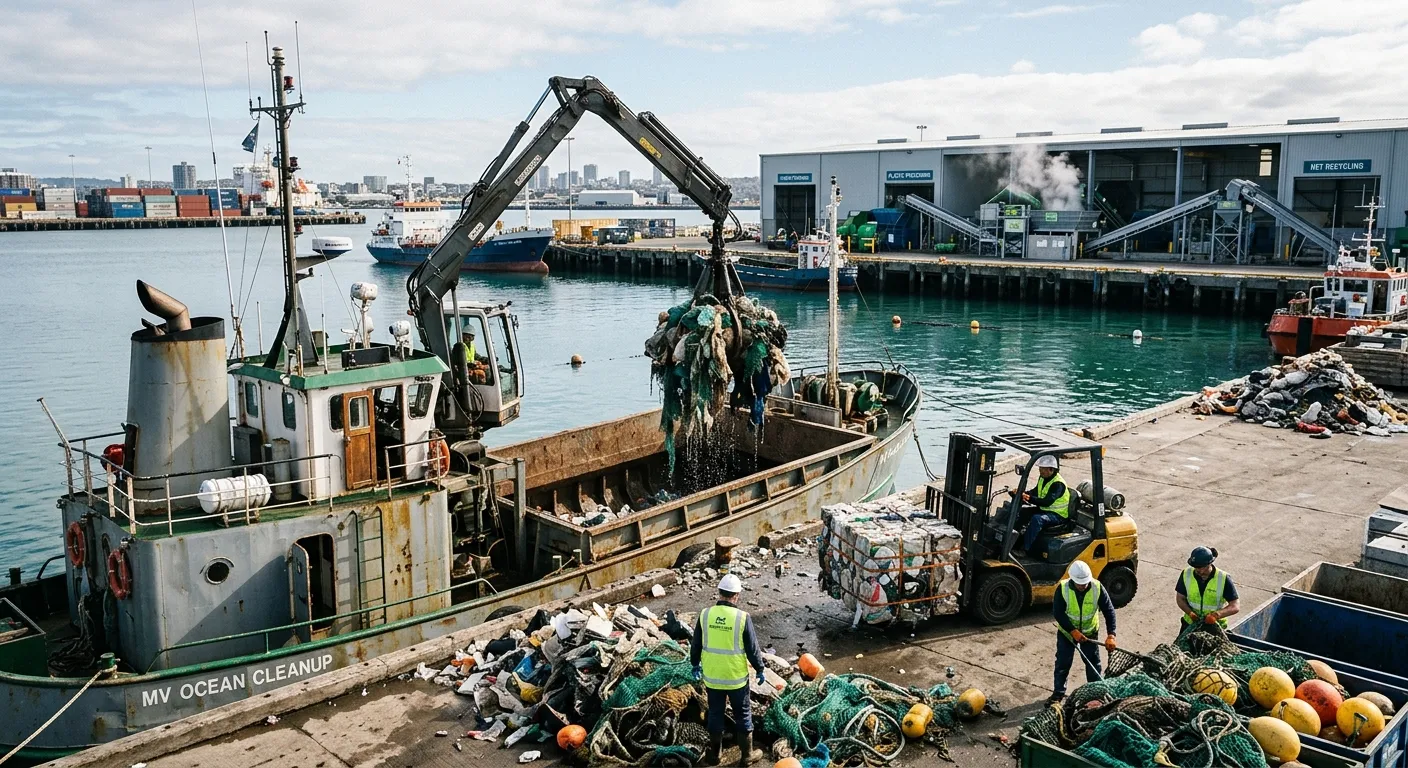
A ship's garbage management plan defines how waste is collected, segregated, stored, processed and delivered for disposal. MARPOL Annex V establishes the requirements for managing garbage at sea, including strict limits on what vessels may discharge overboard. Ports add another layer of requirements, particularly when biosecurity rules, waste notification procedures and disposal fees apply.
A plan that meets flag-state requirements may still need additional procedures to satisfy the rules of a particular port. For masters, chief officers and technical superintendents, effective waste management means understanding both the international regulations and the local requirements along the vessel's trading route.
This guide explains the documents required under MARPOL Annex V, the main discharge restrictions, the rules governing special areas and the waste disposal procedures encountered in European Union, US and Australian ports.
What MARPOL Annex V Regulation 10 Requires On Board
Regulation 10 of MARPOL Annex V establishes three main documentation requirements: garbage placards, a garbage management plan and a Garbage Record Book.
Ships measuring 12 metres or more in length must display placards explaining the applicable garbage discharge rules to crew members and passengers. These notices help ensure that everyone on board understands which types of waste may be discharged and under what conditions.
A garbage management plan is required for every ship of 100 gross tonnage and above, every ship certified to carry 15 or more persons and every fixed or floating platform. The plan must identify the person responsible for implementing its procedures. Although flag administrations do not generally approve the plan, the crew must follow its requirements during daily operations.
The third requirement is the Garbage Record Book. Amendments under resolution MEPC.360(79) took effect on 1 May 2024, lowering the gross tonnage threshold for carrying the book from 400 to 100. Ships below 100 gross tonnage record discharges and accidental losses of garbage in the official logbook instead.
The Garbage Record Book has two parts:
- Part I records garbage other than cargo residues.
- Part II applies to ships carrying solid bulk cargo and records cargo residues under MARPOL Annex V.
Keeping the appropriate records is essential for demonstrating compliance during inspections and for reconciling the quantities of garbage retained, processed and delivered to port reception facilities.
What a Garbage Management Plan Must Include
The IMO guidelines in resolution MEPC.220(63) establish the structure and content of a garbage management plan. The document should describe the vessel's waste management procedures from the point where garbage is generated to its final disposal.
The plan identifies where waste originates, including the galley, accommodation spaces, engine room and cargo areas. It explains how the crew collects and segregates each category, where the waste is stored and how long it can remain on board.
It must also describe the equipment available for processing garbage, such as marine incinerators, compactors and food waste comminutors. Operating limits and procedures for each unit should be included, together with the permitted final disposal route for every waste category. Depending on the type of garbage and the applicable regulations, this may involve discharge at sea or delivery to a port reception facility.
Waste segregation categories
The segregation system should correspond to the categories used in the Garbage Record Book. These categories run from A to K:
Swipe horizontally to view all columns
Category | Garbage type |
|---|---|
A | Plastics |
B | Food waste |
C | Domestic waste |
D | Cooking oil |
E | Incinerator ash |
F | Operational waste |
G | Animal carcasses |
H | Fishing gear |
I | Electronic waste |
J | Cargo residues that are not harmful to the marine environment |
K | Cargo residues that are harmful to the marine environment |
The plan should establish clear procedures for separating these categories and assigning responsibility for their handling. Crew training is also important: new joiners should learn the vessel's segregation system before they begin handling garbage, which helps prevent incorrect disposal and contamination between waste streams.
MARPOL Annex V Discharge Limits: Outside and Inside Special Areas
MARPOL Annex V generally prohibits the discharge of garbage into the sea unless a specific provision allows it. Where discharge is permitted, the vessel must be en route and meet the applicable distance requirements from the nearest land. The rules differ according to the type of garbage and whether the vessel is operating inside or outside a designated special area.
Swipe horizontally to view all columns
Garbage type | Outside special areas | Inside special areas |
|---|---|---|
Plastics, including synthetic ropes and nets | Prohibited | Prohibited |
Comminuted or ground food waste | More than 3 nautical miles from land | More than 12 nautical miles from land |
Food waste that has not been comminuted | More than 12 nautical miles from land | Prohibited |
Cargo residues not harmful to the marine environment | More than 12 nautical miles from land | Permitted only in hold washwater, subject to conditions |
Domestic waste, cooking oil, incinerator ash, operational waste, fishing gear and electronic waste | Prohibited | Prohibited |
These limits are subject to the detailed provisions of the applicable regulations, which take precedence over summary tables. Food waste must meet specific processing requirements before it qualifies for the comminuted discharge allowance: under Annex V, the processed material must pass through a screen with openings no larger than 25 millimetres.
Cleaning agents contained in hold or deck washwater may be discharged only when they are not harmful to the marine environment and the other applicable conditions are met. Mixed garbage requires particular care: when different categories of waste are combined, the strictest discharge restriction applicable to any category in the mixture governs the entire mixture.
Equipment availability therefore affects how a vessel can manage its waste. A ship without a suitable food waste comminutor cannot rely on the allowance for processed food waste beyond 3 nautical miles from land. It must instead retain the waste until a permitted disposal option becomes available.
MARPOL Annex V Special Areas and Their Effective Dates
Special areas are designated sea regions where stricter garbage discharge requirements apply because of their oceanographic and ecological conditions. A designation becomes effective only after the relevant coastal states confirm that adequate reception facilities are available. The following MARPOL Annex V special areas are in effect:
Swipe horizontally to view all columns
Special area | Effective date |
|---|---|
Baltic Sea | 1 October 1989 |
North Sea | 18 February 1991 |
Antarctic area | 17 March 1992 |
Gulfs area | 1 August 2008 |
Mediterranean Sea | 1 May 2009 |
Wider Caribbean Region | 1 May 2011 |
Red Sea | 1 January 2025 (resolution MEPC.382(80)) |
The Black Sea is designated as a special area but is not yet in effect. Some regions also have specific requirements that must be reflected in the vessel's waste management procedures. In the Wider Caribbean Region, comminuted food waste may be discharged more than 3 nautical miles from land, subject to the applicable requirements. In the Antarctic area, food waste containing poultry products must be sterilised before discharge.
Arctic waters are subject to the Polar Code, which introduces additional distance restrictions related to ice. Ships trading in these regions should identify the applicable boundaries and requirements in their voyage planning and garbage management procedures.
The plan should account for the storage capacity needed to retain waste while crossing areas where discharge is prohibited. Without adequate planning, a vessel may reach its storage limit before arriving at a port with suitable reception facilities.
Port Reception Facilities and Advance Waste Notification
MARPOL Annex V requires its parties to provide adequate port reception facilities for garbage. These facilities allow ships to land waste that cannot legally be discharged at sea. The IMO Global Integrated Shipping Information System (GISIS) provides information on reception facilities by port, and IMO circular MEPC.1/Circ.834/Rev.1 establishes standard forms for advance notification of waste delivery and for receipts issued after delivery.
GISIS entries depend on what each state reports, so before relying on a listed facility, confirm with a port agent for vessel waste disposal in that port which categories it actually accepts and in what quantities. Use of the standard forms is voluntary, but they help create consistent records for vessels calling at multiple ports. The master should retain each waste delivery receipt with the Garbage Record Book and check that the recorded quantities correspond to the waste delivered. If a port reception facility is inadequate, the master should report the deficiency to the flag state using the standard reporting format.
These procedures provide a consistent documentation framework, but they do not replace local requirements. Ships must still comply with the notification, handling and disposal rules applicable at each port.
Garbage Disposal Rules in EU Ports
Directive (EU) 2019/883 governs the delivery of ship-generated waste in EU ports, including garbage covered by MARPOL Annex V. When the port of call is known, the master, agent or operator must submit an advance waste notification at least 24 hours before arrival. The notification is submitted through the electronic EU reporting system.
The EU system uses an indirect fee structure. Every ship pays an indirect fee regardless of whether it delivers waste during the port call. In return, the fee provides the right to deliver garbage without an additional direct charge. A direct fee may apply when the volume of waste delivered exceeds the maximum dedicated storage capacity declared in the notification. The directive covers every MARPOL waste stream, not only Annex V garbage, so engine-room sludge under Annex I goes on the same notification and is usually landed in the same call through sludge disposal companies.
The vessel must ensure that its declared capacity reflects the garbage management plan and the waste expected to accumulate before the next suitable disposal opportunity. A ship may leave without delivering waste if it has sufficient dedicated storage for the garbage it is expected to generate before reaching the next port. Ships that demonstrate reduced waste generation may qualify for a lower fee.
Documentation remains important after the port call. The information from the waste delivery receipt must be available on board for at least two years, and the receipt should be checked against the Garbage Record Book to ensure that the recorded and delivered quantities are consistent.
Garbage Disposal Rules in US Ports
In the United States, the Coast Guard implements MARPOL Annex V through 33 CFR Part 151. Additional requirements apply to food-related waste under US agriculture regulations. Under 7 CFR 330.401, garbage on a ship that has called at any port outside the United States and Canada within the previous two years is treated as regulated garbage. It must be contained in tight, covered, leak-proof receptacles while on board in US waters and removed under the direction of an inspector.
An approved facility must then destroy the regulated garbage by incineration, sterilisation or grinding into an approved sewage system. Sterilisation under the regulation means cooking the garbage to an internal temperature of 212°F for 30 minutes. Garbage that is commingled with regulated garbage becomes regulated garbage as well, so segregation and controlled storage matter throughout the voyage and during the port call.
A vessel can return to domestic status by purging regulated stores and landing all garbage under the supervision of Customs and Border Protection or APHIS Plant Protection and Quarantine; the result is recorded on CBP Form AI-288 or PPQ Form 288. For ships trading to US ports, the garbage management plan should describe how regulated garbage will be kept in sealed storage and identify the arrangements for contacting approved waste handlers. These procedures help the vessel comply with agricultural controls without disrupting its planned port operations.
Garbage Disposal Rules in Australian Ports
Australia treats garbage from international ships as a high biosecurity risk. Collection and treatment are handled by providers operating under an Approved Arrangement with the Department of Agriculture, Fisheries and Forestry (DAFF). Historically, this meant that mixed waste was collected and disposed of as biosecurity waste, leaving limited opportunities for recycling.
Australia then began testing an alternative for clean, segregated waste. The DAFF Maritime Waste Recycling Pilot opened to international commercial and cruise vessels on 1 December 2024, and from 1 July 2026 the department replaced it with a Conveyance Waste Recycling Policy for commercial and cruise vessels. Under the recycling arrangements, participating ships identify the ports where they will discharge waste, the Approved Arrangement provider responsible for collection and the recycling provider involved in processing the material. Recyclable waste must be clearly labelled and inspected by a biosecurity officer at the first point of entry before it can be released for recycling; material that fails inspection continues to be managed as biosecurity waste.
For vessels calling at Australian ports, the garbage management plan should describe how each waste stream will be segregated and labelled. The master or agent should also confirm the arrangements with the relevant Approved Arrangement provider before arrival. These steps are particularly important when the vessel intends to recycle waste rather than send all garbage for conventional biosecurity disposal.
Port Call Garbage Management Checklist
A garbage management plan is effective only when it reflects the vessel's actual trading pattern, available storage and the requirements of its planned port calls. The master and technical superintendent should review the plan against the voyage schedule and confirm that the vessel can retain waste until an appropriate disposal opportunity becomes available.
Swipe horizontally to view all columns
Stage | Required action |
|---|---|
Voyage planning | Confirm that storage capacity for each garbage category is sufficient until the next port with suitable reception facilities. Identify special areas along the route and calculate the additional storage needed while discharge is restricted. |
Before arrival in an EU port | Submit the advance waste notification at least 24 hours before arrival. |
Before arrival in a US port | Keep regulated garbage in tight, covered, leak-proof receptacles and arrange collection by an approved handler. |
Before arrival in an Australian port | Book an Approved Arrangement provider. If recycling is planned, identify the recycling provider and confirm the segregation and labelling procedures. |
Before arrival at other ports | Coordinate with the agent and submit the IMO standard notification form where required or appropriate. |
Alongside | Deliver garbage according to the applicable Garbage Record Book categories and the port's handling requirements. Obtain the waste delivery receipt and check the quantities against the ship's records. |
Alongside in an EU port | Confirm that any direct fee applies only to waste exceeding the declared dedicated storage capacity. |
After departure | Record the delivery in the appropriate part of the Garbage Record Book and file the receipt with the relevant records. Keep the receipt information on board for at least two years where EU requirements apply. Report inadequate port reception facilities to the flag state using the applicable IMO format. |
Plan review | Update the garbage management plan when equipment changes, such as the installation of a new incinerator or comminutor, or when the vessel begins trading through a special area. |
This review should be repeated whenever the vessel's route, waste processing equipment or disposal arrangements change. A plan that works for one trading pattern may not provide enough storage or suitable procedures for another.
Sourcing Garbage Processing Equipment and Port Waste Services
A garbage management plan is only as good as the equipment and shore-side services behind it: processing units sized for the vessel's trading pattern on board, and a provider in each port who can collect every waste category and issue the delivery receipt the Garbage Record Book depends on. Confirming those providers before arrival, rather than through the agent on the day, is what turns the plan from a document into a working procedure.
Before requesting quotations, define the equipment requirements, the waste categories involved and the ports where collection or disposal will be needed, then send the same brief to every shortlisted supplier so that their proposals can be compared on a consistent basis. The goal is a waste management system that complies with MARPOL Annex V while absorbing the biosecurity, notification and fee requirements the vessel meets along its trading routes.